National AI Plan could spell big year for tradespeople jobs
This is a subtitle for your new post
By Simon Dux, taken from the following link: National AI Plan could spell big year for tradespeople jobs – W.Media
The federal government’s newly released National AI Plan, launched under the banner of “Empowering All Australians”, makes clear that building Australia’s AI future will require more than software and algorithms. It highlights the need to invest in digital and physical infrastructure, including data centres, and crucially, in the workforce to build and run them.
For the data-centre industry, this matters deeply. Mission Critical Recruitment data centre recruitment director Gareth Johnston told W.Media that the “talent pipeline” the government is calling for isn’t just a nice-to-have – it’s critical to avoid a looming bottleneck.
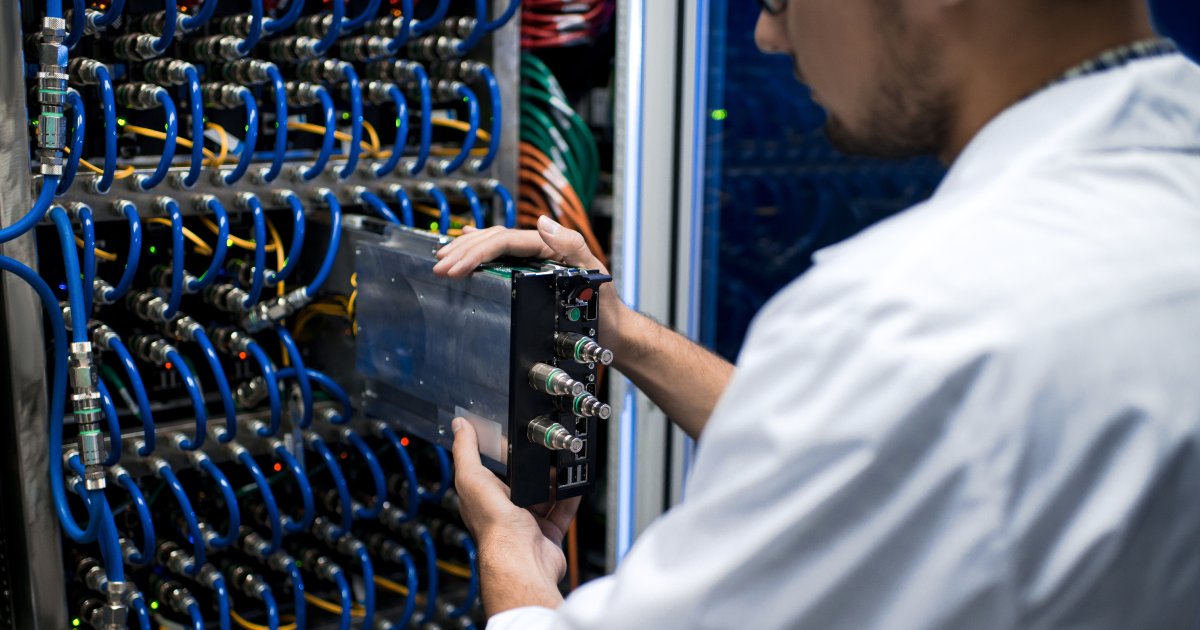
Johnston points first to electricians as the trade that will see the sharpest rise in demand. As he puts it: “Electricians; due to the AI boom which will require massive power capacity. Electricians are needed to build, install and maintain the power systems, networks and all onsite electrical equipment.” Their role becomes even more central as hyperscale operators ramp up both grid connections and on-site generation to meet the intense demands of AI-driven loads.
He also notes rising demand for HVAC technicians and plumbers; not for the domestic kind of work, but specialised trades supporting large-scale cooling environments. As more operators push into high-density compute and liquid-assisted cooling to support AI inference and training clusters, data centres will increasingly rely on workers with expertise in pumps, heat exchangers, industrial pipe-fitting, and advanced cooling-loop maintenance.
Johnston emphasises that these trades will become “critical infrastructure roles” in their own right, fundamental to keeping facilities operating at safe thermal loads.
Skills shortage is real
Johnston suggests the skills shortage is already visible across construction, operations and engineering roles, even though AI-driven demand for data-centre capacity is only just beginning. “We are already seeing shortages across the board, and we are still at least a couple of years away from demand for these skillsets peaking,” he says. “I cannot foresee any possibility where the world gets even close to producing enough skilled workers to meet this demand.”
He argues that the sector risks building a pipeline of infrastructure with no matching pipeline of talent to operate it.
This gap has real operational consequences. Data-centre operators are already reporting difficulties sourcing experienced facilities technicians, design engineers, as well as service and commissioning managers – roles that require a blend of electrical, mechanical and digital competency. The pressure extends beyond recruitment and into retention. Johnston warns that without coordinated workforce development, the strain on existing workers could intensify.
He notes that overwork and understaffing risk could become embedded features of the industry, undermining both safety and long-term workforce sustainability.
Structural issue
The challenge, he argues, is not solely a hiring issue but a structural one. Australia currently lacks a clear vocational pathway tailored to data-centre work, despite the sector’s growing economic significance. Many of the required trades exist – electric, mechanical, plumbing – but the specialised versions of those trades (data-centre electricians, industrial cooling technicians, high-voltage specialists, and operators who understand both mechanical plant and digital infrastructure) are not being formally cultivated at scale.
Johnston believes that without training interventions targeted at data centre–specific competencies, the labour bottleneck could become one of the biggest constraints on national AI ambitions.
Future-proof jobs
At the same time, he sees a significant opportunity. The roles emerging in data centres are stable, long-term and geographically diverse, spanning urban hyperscale hubs, edge locations and regional construction sites. They offer clear progression pathways and access to a sector unlikely to slow in the coming decade. For young tradespeople, or workers looking to reskill, data centres represent what Johnston describes as “real, tangible, future-proof jobs” that support the country’s digital economy in a direct and essential way.
This is where the National AI Plan’s “Support and train Australians” pillar comes into sharp focus. The Plan explicitly commits to building an inclusive, upskilled workforce capable of supporting AI-enabled industries and infrastructure. It calls for the adaptation of national vocational education and training (VET) systems under the National Skills Agreement (NSA) to provide responsive, accessible training and qualifications.
Efforts under the Future Skills Organisation (FSO) will see the introduction of AI-relevant micro-credentials and upskilling programs, while Jobs and Skills Australia will supply labour-market insights to align training supply with demand. The Plan also aims to expand AI-ready training via TAFEs and other institutions, offering pathways through apprenticeships, micro-credentials, or higher education, all of which could be leveraged by the data-centre sector.
Industry partners
Johnston believes that for data-centre operators, this Plan should be viewed as an opportunity. Operators could partner with TAFEs, private training providers, and industry associations to build in-house training programs or sponsor apprenticeships with data-centre-specific competencies. Industry bodies might lobby for the inclusion of data-centre trades in national skills frameworks. Governments, meanwhile, should support these efforts by ensuring funding, apprenticeship grants and awareness campaigns reach technically oriented trades, not just IT roles.
He also argues for raising awareness of the data-centre sector among young people, workers transitioning between industries, or those uncertain about their next career step. The roles are often high-paying, portable across international markets, and foundational to the infrastructure of tomorrow. Johnston describes the data centre industry as “exciting, international … a career where you can grow quicker than almost any other industry on the planet right now.”
Advice for candidates
For those already working in data centres, especially early-career professionals with two to five years’ experience, he urges continuous learning, active industry engagement, and self-investment. Keep up to date with emerging technologies, attend industry forums or conferences, enrol in external training or micro-credential courses, and refine a broad skill set across electrical, mechanical, systems control and digital operations. In an environment of tight labour supply, he believes those who “go the extra mile” will find accelerated career progression.
For professionals outside the sector who want to transition in, Johnston recommends building evidence of commitment: complete a data-centre introduction course (many options are low-cost), attend industry events, volunteer for projects, and reach out proactively to employers with well-crafted applications that clearly explain why their existing skills are relevant. He says that those with experience in building management, facilities maintenance, power-plant equipment, or the design and construction of large technically complex buildings are particularly well-positioned to make the shift.
But Johnston also raises a note of caution; rapid growth can bring risk. In a tight labour market, younger professionals may be offered senior roles early, but with great responsibility comes the potential for mistakes. “If you are young and senior, you do put yourself in a position to be ‘shot down’ if you make mistakes,” he warns. Given the high-pressure, high-stakes nature of data-centre construction and operations, where errors can lead to outages, safety incidents, or expensive downtime, he encourages candidates to treat early senior offers with care.
Interview process
Candidates should ask detailed questions during interviews: about support structures, success metrics, training and mentoring, and role expectations. Check for signs of hesitation from hiring teams, high turnover, or a lack of clarity around responsibilities – all potential warning signs. He advises also consulting trusted contacts or mentors before taking a leap.
For employers and operators, Johnston says the responsibility is clear but manageable: invest in training, build in succession planning, foster open communication, provide mentoring or external support, and create a culture where asking for help is normal. He argues that firms should not view workforce development as optional or as a cost burden – but rather as a long-term investment in reliability, safety, and growth.
The timing of the National AI Plan therefore matters. It signals that Australia expects not just a surge in AI-driven demand, but a major expansion of the physical infrastructure required to support it – data centres, energy systems, cooling, and more. Perhaps more importantly, the Plan recognises that without a capable, well-trained, and inclusive workforce, those ambitions may stall.
If data-centre operators, educators, training institutions and policymakers align their efforts — leveraging the Plan’s funding, training frameworks and inclusivity objectives, Australia could see a new wave of highly skilled, well-paid, trade-based jobs emerge nationwide. Johnston believes these roles would underpin the backbone of the country’s AI economy, offering stable, long-term career pathways for young people, career changers, and workers across regional and urban Australia.
W.Media spoke to Gareth ahead of the Oceania Cloud & Data Center Awards 2025, Celebrating Innovation, Sustainability and Achievement., at the St Michael’s Golf Club, Little Bay, Sydney, New South Wales – 10 December 2025. In honour of our late colleague and friend Nick Parfitt, we are dedicating the very special Individual Contribution and Achievement award to him. Nick was immensely proud to have played a key role in launching our Oceania Cloud & Datacenter Awards. His vision, passion, and commitment laid the foundation for what this event has become. Mission Critical Recruitment is the proud sponsor of this inaugural, special award category.